As businesses expand, managing inventory manually becomes increasingly challenging. A Warehouse Management System (WMS) helps maintain organization, improve inventory accuracy, and streamline warehouse operations, enabling businesses to operate more efficiently and meet customer demands with confidence.
What is a Warehouse Management System (WMS)?
A Warehouse Management System (WMS) is a software application designed to optimize and control warehouse operations from the moment materials enter the facility until they are shipped out. It helps businesses manage inventory storage, picking, packing, transfers, and shipping processes while maintaining visibility across warehouse activities.
WMS also uses inventory and demand trend data to improve warehouse efficiency. For example, fast-moving products can be placed closer to packing stations to speed up order fulfillment, while products with earlier expiration dates can be prioritized for dispatch.
By providing real-time inventory visibility and streamlined workflows, a WMS helps warehouses operate more accurately and efficiently.
How Does a WMS Work?
Below is a quick overview of the key processes involved in a Warehouse Management System:
Receiving
The receiving process involves inspecting incoming deliveries to verify product quality and quantity before they are accepted into inventory.
Put-Away
Once products are received, they are moved to their designated storage locations. Proper put-away procedures help reduce the risk of misplaced items and keep inventory organized.
Picking
Picking is the process of locating and retrieving products from their storage locations to fulfill customer orders.
Packing
After items are picked, they are gathered and packaged appropriately for shipment.
Transfer
Inventory transfers involve moving products from one storage location to another within the warehouse or between facilities when necessary.
Shipment Inspection
Before products leave the warehouse, they undergo a final inspection to verify that the correct items and quantities are being shipped.
Delivery
Once approved for shipment, products are dispatched and delivered to customers or their intended destinations.
Inventory Management
A WMS continuously tracks inventory levels, warehouse space utilization, stock movements, and returned or defective items to maintain accurate records.
Who Benefits from a WMS?
A Warehouse Management System can benefit businesses across various industries, including:
Warehouses and distribution centers
Retail businesses
Manufacturing companies
E-commerce businesses
Logistics and supply chain providers
Food and beverage companies
Healthcare and pharmaceutical organizations
Any business that handles inventory can improve operational efficiency through a WMS.
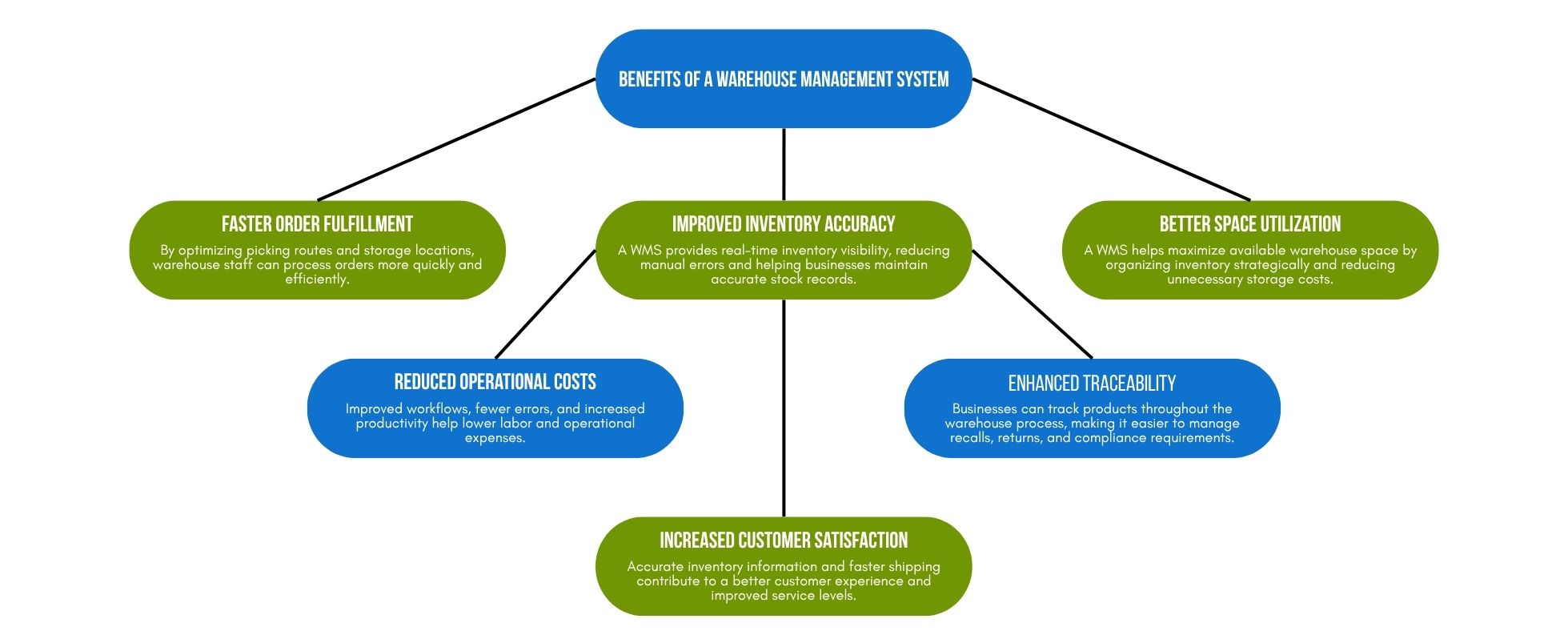
Benefits of a Warehouse Management System
How Can a WMS Help Your Business?
Whether you’re struggling with inventory inaccuracies, delayed shipments, or inefficient warehouse processes, a Warehouse Management System provides the tools needed to gain better control of your operations.
By automating key warehouse tasks and providing real-time inventory visibility, a WMS allows businesses to improve productivity, reduce errors, and make smarter operational decisions.
As your business grows, having the right warehouse management solution can help ensure that your operations remain efficient, organized, and ready to meet customer demands.
Contact Barcotech today to learn how our warehouse management solutions can help optimize your business operations.